

If you still think a car radiator is just “that silver block behind the grille,” 2026 has a surprise waiting in the engine bay.
Radiators are still core parts of vehicle cooling. But the word now covers a wider world: aluminum-plastic radiators, all-aluminum performance units, charge air coolers, oil coolers, condensers, heater cores, EV liquid cold plates, battery pack cooling boxes, and fuel cell thermal systems.
That is not marketing confetti. It is what real vehicle programs now require.
In high-mix production, one radiator line may need to support thousands of models, dozens of new launches every month, strict leak testing, corrosion protection, and OEM development workflows. In our own production experience, the product library for heat exchange systems spans more than 6,000 mass-producible items, including about 5,000 radiator models, 600 intercooler models, 1,200 condenser models, 300 heater cores, 200 oil coolers, and 200 evaporators.
So yes, this guide will explain the basic radiator types. But we will also go one level deeper: how to choose them, how to test them, and how to avoid buying a shiny part that turns into a warranty ticket with hose clamps.
What Does an Automotive Radiator Actually Do?
A radiator is a heat exchanger. Its job is to move heat from a hot fluid into cooler air.
In an internal combustion engine, coolant absorbs heat from the engine block and cylinder head. The water pump pushes that hot coolant into the radiator. Air passes across the radiator core. Heat moves from coolant to tube, from tube to fin, and from fin to air.
SAE has described the word “radiator” as slightly misleading because the main cooling action is forced convection, not radiation. In normal-human English: airflow does most of the work, not thermal wizardry. See the classic SAE paper, Engine Cooling Radiators, for the engineering version.
MAHLE also describes the radiator as a key part of the cooling module, built from a core and tanks, placed in front-end airflow to release waste engine heat to outside air. Their vehicle cooling guide is a useful external reference.
In 2026, that same heat-exchanger logic is no longer limited to the engine radiator. It also applies to:
- Charge air coolers for turbocharged engines
- Oil coolers for engine oil and transmission oil
- Condensers and evaporators for air conditioning
- Heater cores for cabin heating
- Chillers for EV thermal loops
- Liquid cold plates for batteries, motors, controllers, and domain control units
- Fuel cell water-side, air-side, and hydrogen-side heat exchangers
That is why “radiator types” is no longer a simple parts-counter question. It is a system design question.
The Main Automotive Radiator Types at a Glance
Here is the quick map before we open the toolbox.
| Classification | Common Types | Best Fit | Main Watch-Out |
|---|---|---|---|
| Material | Aluminum-plastic | Passenger cars, OE replacement, cost-sensitive programs | Plastic tank aging, gasket sealing, inlet/outlet cracks |
| Material | All-aluminum | Performance cars, heavy-duty vehicles, hot climates, export upgrades | Welding quality, corrosion, leak control |
| Material | Copper-brass | Classic cars, repairable units, some industrial uses | Weight, cost, modern packaging limits |
| Flow path | Crossflow | Modern passenger cars, low hood lines | Front-end packaging and fan matching |
| Flow path | Downflow | Older vehicles, trucks, special layouts | Height requirement |
| Core design | Single row | Standard-duty vehicles | Limited reserve under extreme heat load |
| Core design | Double or multi-row | Towing, off-road, heavy-duty, high ambient temperature | Air-side resistance and coolant pressure drop |
| Application | EV liquid cooling | Battery, motor, inverter, fast charging, cabin loops | Cleanliness, leak risk, brazing/welding consistency |
| Application | Fuel cell thermal management | Fuel cell stack, hydrogen path, air path, coolant loop | Hydrogen embrittlement, corrosion, thermal shock |
Natrad’s radiator buying guide covers common aftermarket categories such as crossflow, downflow, aluminum core, performance, electric, single core, double core, and compact radiators. That structure is helpful for repair and upgrade buyers. This article keeps those basics, then expands the guide for OEM, EV, commercial, and fuel cell use cases.
Radiator Types by Material
Material is the first filter most buyers use. It affects weight, cost, durability, repairability, corrosion resistance, and manufacturing process.
Aluminum-Plastic Radiators
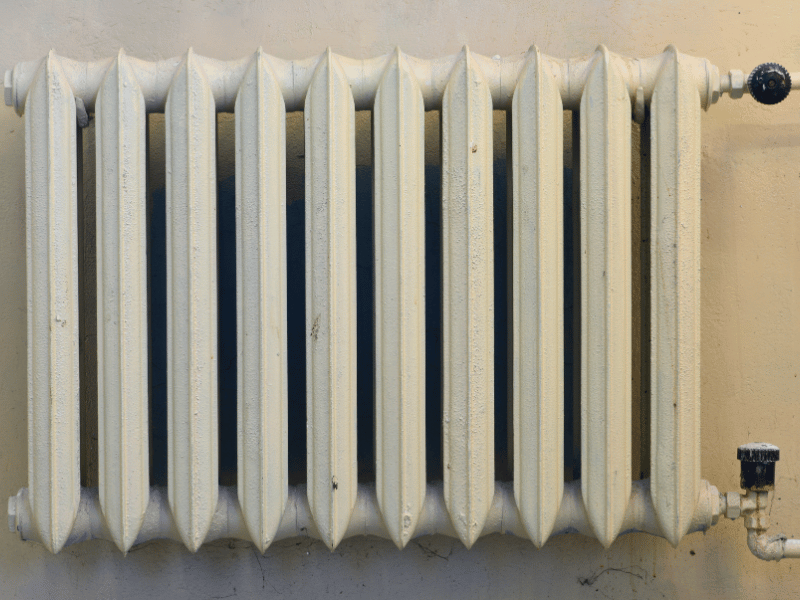
Aluminum-plastic radiators are common in passenger vehicles.
The core uses aluminum tubes and fins. The tanks are usually plastic. This design gives a good balance of cost, weight, heat transfer, and mass production efficiency.
Use aluminum-plastic radiators when you need:
- Standard OE replacement
- Low to mid heat load
- Good weight control
- Competitive pricing
- Fast fitment across many passenger car models
The weak points are usually not the aluminum fins. They are the plastic tank, sealing gasket, crimped joint, inlet, outlet, and mounting points.
That is why leak testing matters. In real production, every unit should face airtightness checks, water testing, or helium leak testing before it leaves the factory. A radiator can look perfect on a product photo and still leak like a spreadsheet with no version control.
All-Aluminum Radiators

All-aluminum radiators use aluminum for the core and tanks. They are common in performance vehicles, commercial vehicles, modified cars, racing builds, and high-load applications.
They can offer:
- Better heat resistance
- Higher structural strength
- Lower weight than copper-brass designs
- Better fit for custom or high-performance cores
- Stronger appeal in export and upgrade markets
But “all-aluminum” is not a magic sticker.
The real questions are:
- Is the unit brazed, TIG welded, laser welded, or built with another process?
- What leak rate does the supplier control?
- Is the coating thickness controlled?
- Has the part passed vibration, salt spray, pressure cycling, and thermal shock testing?
- Can the supplier repeat the same quality at scale?
In production programs we have seen, quality control may include nitrogen-protected continuous brazing furnaces, high-low temperature vacuum brazing, automated spray coating, and helium leak systems. One mature benchmark is coating thickness controlled around 40-120 um and leak rate controlled at 50 ppm.
That is the boring stuff. It is also the stuff that keeps coolant inside the part, which is a charming feature.
Copper-Brass Radiators

Copper-brass radiators are older but not obsolete.
They can be useful for:
- Classic vehicles
- Repair-heavy markets
- Some industrial equipment
- Applications where field serviceability matters
Copper has strong thermal conductivity. Brass tanks and soldered construction can also be repaired more easily in some workshops.
The trade-offs are weight, cost, and packaging. Modern passenger vehicles often favor aluminum because it is lighter and easier to integrate into compact front-end modules.
So copper-brass is not “bad.” It is just more specific. Use it when the application benefits from serviceability or legacy fitment.
Advanced Materials for 2026 Thermal Loads
The phrase “automotive radiator” is now drifting into electronics cooling.
Smart cockpits, ADAS computers, domain controllers, central compute units, and high-power EV platforms create local heat sources that do not behave like old engine blocks.
That is where you may see:
- Liquid cold plates
- Heat pipes
- Vapor chambers
- High-conductivity die-cast materials
- Brazable aluminum alloys
- Thermal interface materials
- Friction stir welded liquid channels
In one multi-domain controller cooling project, a liquid cooling design used brazable die-cast material with thermal conductivity up to 160 W/m.K. Thermal simulation showed a junction temperature of 93.719 C under the defined boundary conditions.
That does not mean every controller needs liquid cooling. It means 2026 radiator selection must include electronics thermal design when the vehicle architecture demands it.
Radiator Types by Coolant Flow Path
Flow path affects packaging, coolant residence time, pressure drop, and cooling efficiency.
Crossflow Radiators

Crossflow radiators have tanks on the left and right sides. Coolant moves horizontally across the core.
They are common in modern passenger cars because they fit well under lower hood lines. They also work well in wide front-end layouts.
Choose crossflow when:
- Hood height is limited
- The front-end module is wide
- The fan and shroud can cover the core well
- You need modern passenger car fitment
Do not choose it blindly. Check pipe direction, mounting points, condenser stacking, fan coverage, and airflow path.
Downflow Radiators
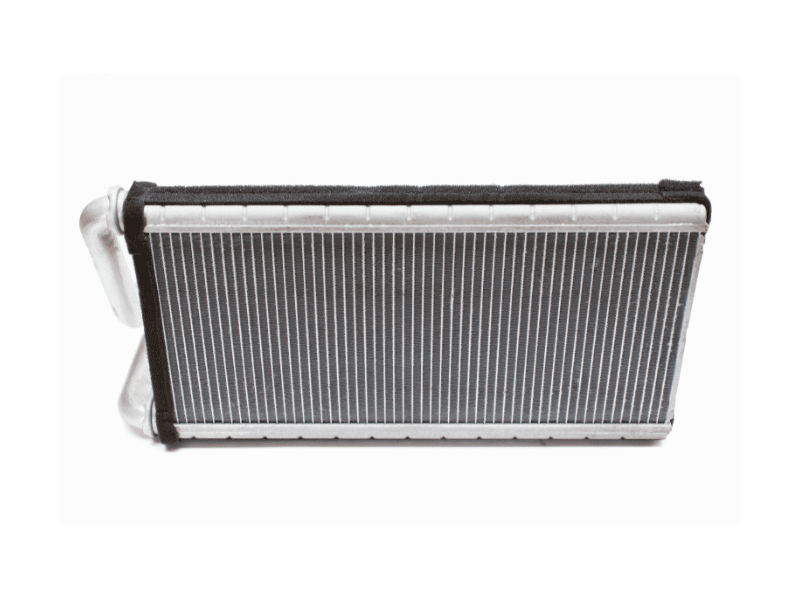
Downflow radiators have tanks at the top and bottom. Coolant moves vertically through the core.
They are often found in older vehicles, trucks, and special equipment layouts.
Choose downflow when:
- The vehicle has enough vertical space
- The original platform used top-bottom tanks
- Service access is easier with that layout
- The design suits truck or legacy packaging
Downflow radiators are simple and proven. The limitation is packaging height.
Single-Pass and Multi-Pass Radiators

In a single-pass radiator, coolant crosses the core once. In a multi-pass design, baffles inside the tank force coolant to travel through the core more than once.
More passes can increase heat transfer opportunity. They can also increase pressure drop.
That second part matters.
If the coolant path becomes too restrictive, the pump has to work harder. Flow rate may fall. Then your clever design starts behaving like a gym membership in February: impressive in theory, less effective in daily use.
Before choosing multi-pass, ask for:
- Coolant flow rate
- Pressure drop
- Heat rejection data
- Pump compatibility
- Core size and tube design
- Air-side resistance
Flow resistance testing is not optional for serious programs. It is how you separate engineering from vibes.
Radiator Types by Core Design
Core design includes the number of tube rows, tube geometry, fin density, fin type, and core thickness.
Single-Row Radiators
Single-row radiators use one row of tubes.
They are useful for:
- Standard passenger vehicles
- Cost-sensitive replacement parts
- Lightweight designs
- Vehicles with limited heat load
- Compact front-end modules
Do not judge a single-row radiator only by row count. Tube width, fin density, louver design, airflow, and coolant speed can make a well-designed single-row core outperform a lazy thicker core.
Double-Row and Multi-Row Radiators
Double-row and multi-row radiators increase core depth and heat exchange area.
They are common in:
- Larger engines
- Towing vehicles
- Off-road vehicles
- Commercial trucks
- Hot climate applications
- High-performance upgrades
The benefit is higher cooling reserve. The risk is higher air resistance and more weight.
In simple terms: more metal does not always mean more cooling. If airflow cannot pass through the core, you have built a nice aluminum wall.
Compact Radiators
Compact radiators are designed for tight spaces.
They are common when the vehicle front end also has:
- Condenser
- Charge air cooler
- Transmission oil cooler
- Radar bracket
- Active grille shutters
- Crash beam
- Fan module
Compact design requires better tube, fin, flow path, and fan matching. You cannot simply shrink a radiator and hope physics politely signs the approval form.
Performance Radiators
Performance radiators are built for higher heat load.
They may use:
- Larger cores
- Higher fin density
- All-aluminum construction
- Multi-pass flow
- Improved tanks
- Better fan shrouds
- Stronger mounting structures
They are common in racing, modified vehicles, heavy towing, off-road builds, and high-temperature regions.
But the right performance radiator depends on the whole system. Engine output, ambient temperature, vehicle speed, fan capacity, grille opening, condenser position, coolant pump, thermostat, and hose routing all matter.
The radiator is the hero on the invoice. The system does the work.
Radiator Types by Vehicle Application
Different vehicles punish cooling systems in different ways.
Passenger Car Replacement Radiators

Passenger car replacement radiators need accurate fitment first.
The key buying checks are:
- OE number
- Core size
- Tank layout
- Pipe direction
- Mounting points
- Sensor ports
- Transmission oil cooler connection
- Fan and shroud fit
Aluminum-plastic crossflow radiators are common here. The buyer usually wants fast installation, stable quality, low leak risk, and fair cost.
4×4, Pickup, and Commercial Vehicle Radiators

These vehicles face higher heat load and dirtier conditions.
They may tow, climb, idle for long periods, run in mud, or work in high ambient temperature. Cooling reserve matters.
Look for:
- Stronger core
- Better corrosion resistance
- Good fan shroud coverage
- Vibration resistance
- Easy cleaning
- Reliable mounting
- Proven pressure cycle data
If the vehicle spends its life pulling loads at low speed, highway airflow data alone will not tell the full story.
Heavy Equipment and Industrial Radiators
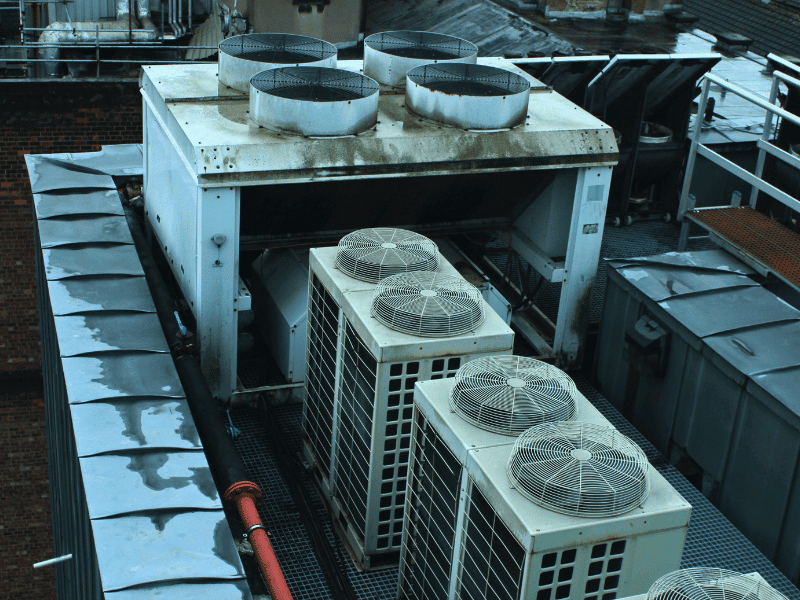
Construction machinery, mining vehicles, agricultural machines, and other heavy equipment need rugged cooling.
The main issues are:
- Dust
- Vibration
- Continuous duty
- Short service windows
- High thermal load
- Harsh cleaning methods
- Corrosion risk
For these applications, ask about vibration testing, salt spray testing, pressure cycling, fin durability, and field cleanability.
High-Performance and Motorsport Radiators
Performance vehicles have high peak heat load. They may also have poor airflow because the front end is packed with intercoolers, oil coolers, and aero parts.
Ask for:
- Heat rejection data
- Core pressure drop
- Fan and shroud match
- Coolant pump compatibility
- Track or high-load validation
- Mounting strength
An oversized radiator with poor airflow can underperform a smaller, well-ducted one. Air is lazy. It will always take the easiest path unless the shroud and ducting tell it otherwise.
EV Thermal Management: Radiators Did Not Disappear
Electric vehicles do not have hot engine blocks. That does not mean they do not need cooling.
They still need thermal control for:
- Battery packs
- Motors
- Inverters
- DC-DC converters
- On-board chargers
- Fast charging loops
- Cabin heating and cooling
- Domain control units
- Central compute platforms
The hardware may include chillers, liquid cold plates, battery pack cooling boxes, low-temperature radiators, and integrated thermal modules.
In current production planning, EV thermal products may require dedicated lines, clean rooms, high-low temperature vacuum brazing, friction stir welding, laser welding, and strict leak control. One practical production setup we have seen added two new energy lines with planned capacity around 100,000 units per year for liquid cold plates, pack cooling boxes, hydrogen-related heat exchangers, and similar products.
The main EV risks are:
- Leaks near high-voltage systems
- Poor coolant cleanliness
- Channel blockage
- Uneven battery temperature
- Weak brazing or welding consistency
- Thermal fatigue under fast charging
This is why EV cooling should not be treated as “a radiator with different hose ports.” It is a thermal system.
Fuel Cell Thermal Management: Water, Air, and Hydrogen All Join the Meeting
Fuel cell vehicles add another layer.
Thermal management may include:
- Fuel cell stack cooling
- Water-cooled intercoolers
- Hydrogen heat exchangers
- Intelligent ATS cooling modules
- Air path temperature control
- Coolant loop control
The key challenges include:
- Cleanliness
- Corrosion resistance
- Hydrogen embrittlement resistance
- Cold-hot shock resistance
- Tight temperature control
- Communication with the vehicle control system
In one fuel cell ATS program, the cooling module communicated with the vehicle through CAN. It adjusted fan speed and airflow based on operating conditions. Compared with traditional products, the system improved efficiency by 25-30% under the project benchmark.
That is the difference between “make the fan bigger” and “make the thermal system smarter.”
The Other Heat Exchangers Buyers Often Mean
When people search for “car radiator types,” they may actually need another heat exchanger.
SAE’s overview of automotive heat exchanger technology lists several common vehicle heat exchangers, including radiators, heaters, condensers, evaporators, oil coolers, and charge air coolers. See Advances in Automotive Heat Exchanger Technology.
Here is the quick translation layer.
| Part | What It Cools or Heats | Where It Fits |
|---|---|---|
| Radiator | Engine coolant or low-temperature coolant loop | Front cooling module |
| Intercooler | Turbocharged intake air | Front module or intake path |
| Oil cooler | Engine oil, transmission oil, hydraulic oil | Engine bay, transmission loop, or external module |
| Condenser | Refrigerant after compression | Front of vehicle, usually ahead of radiator |
| Heater core | Cabin heating air | HVAC box |
| Evaporator | Cabin cooling air | HVAC box |
| Chiller | EV coolant loop through refrigerant circuit | EV thermal management module |
| Liquid cold plate | Battery, inverter, motor controller, domain controller | EV or electronics thermal system |
| Hydrogen heat exchanger | Hydrogen-side fuel cell thermal control | Fuel cell system |
The important point: these parts share heat exchanger principles, but they do not share the same design rules.
The 8 Questions to Ask Before Choosing a Radiator
Use this checklist before buying or specifying a radiator.
| Question | Why It Matters | What to Ask the Supplier |
|---|---|---|
| 1. What vehicle and installation space? | Fitment errors waste time fast | OE number, core size, ports, brackets, fan match |
| 2. What heat load and duty cycle? | City driving, towing, idling, racing, and fast charging are different | Heat rejection data and test boundary conditions |
| 3. What material and process? | Material affects cost, weight, corrosion, and life | Aluminum-plastic, all-aluminum, copper-brass, brazing, welding |
| 4. What leak test standard? | A leak turns a cheap part into an expensive lesson | Air test, water test, helium test, leak rate |
| 5. What durability tests? | Real vehicles vibrate, corrode, heat, cool, and repeat | Pressure cycle, salt spray, vibration, thermal shock |
| 6. What cleanliness control? | EV and fuel cell systems hate particles | Cleanliness test, flushing process, clean room if needed |
| 7. Is OEM development support needed? | New platforms need structured development | APQP, DFMEA, PFMEA, PPAP, SOP, SIP |
| 8. Can the design scale into production? | Prototype success is not mass production success | Capacity, tooling plan, MES traceability, inspection plan |
That last point is easy to underestimate.
A supplier may build a good prototype. The harder task is building thousands of units with the same dimensions, same leak performance, same coating thickness, same cleanliness, and same documentation.
In large-scale radiator production, practical capability may include five automatic core assembly lines, daily output above 2,000 units, APQP project control, MES traceability, and 100% final inspection. Those details sound less exciting than “high performance.” They are also what keep the project alive after the kickoff meeting snacks are gone.
Quality Checks That Matter More Than Pretty Photos
Radiator quality is not just visual.
The part has to survive pressure, temperature, vibration, corrosion, shipping, installation, and years of coolant chemistry. That means the validation plan matters.
| Test or Control | What It Catches | Why It Matters |
|---|---|---|
| Air leak test | Gross leakage | Fast final screening |
| Water test | Visible leaks under pressure | Simple and effective for many products |
| Helium leak test | Fine leakage | Useful for tighter leak rate control |
| Pressure cycle test | Fatigue under repeated pressure | Simulates long-term system stress |
| Flow resistance test | Excess pressure drop | Protects pump and cooling performance |
| Thermal performance test | Heat rejection capacity | Confirms the radiator can do the job |
| Cleanliness test | Particles, residues, contamination | Critical for EV, fuel cell, and precision systems |
| Salt spray test | Corrosion risk | Important for harsh climates and road salt |
| Vibration test | Mounting and structure weakness | Important for trucks, off-road, and machinery |
| High-low temperature test | Thermal expansion and contraction issues | Finds material and joint weaknesses |
If a supplier cannot explain its test plan, treat the product photo as decorative wallpaper.
Case Snapshots from Real Thermal Programs
The following examples are anonymized, but the technical lessons are the useful part.
Case 1: Fuel Cell ATS Is Not Just a Bigger Fan
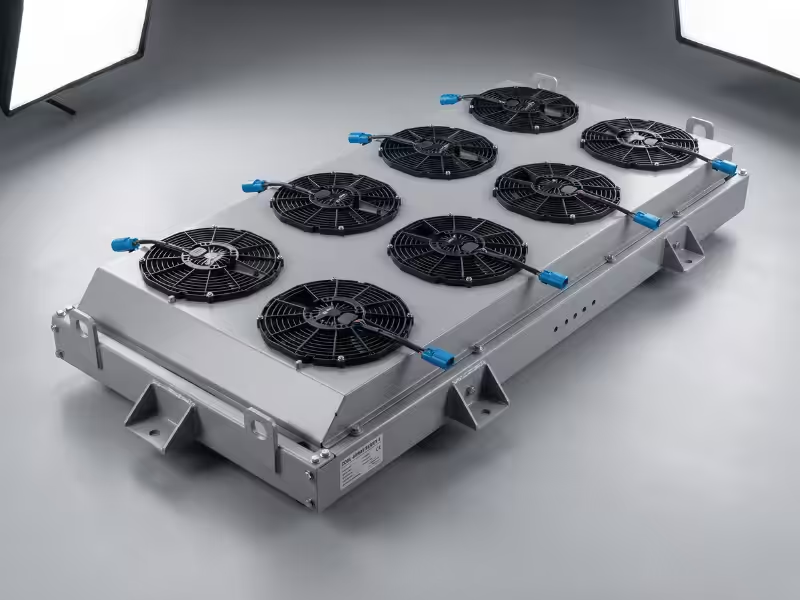
A fuel cell system needed tighter thermal control across operating conditions.
The solution used an intelligent ATS module that communicated with the vehicle over CAN. It adjusted speed and airflow based on load and temperature demand.
The result: efficiency improved by 25-30% compared with the traditional benchmark.
The lesson: fuel cell cooling is not only about heat rejection. It is about controlled heat rejection.
Case 2: Domain Controller Liquid Cooling Joins the Party

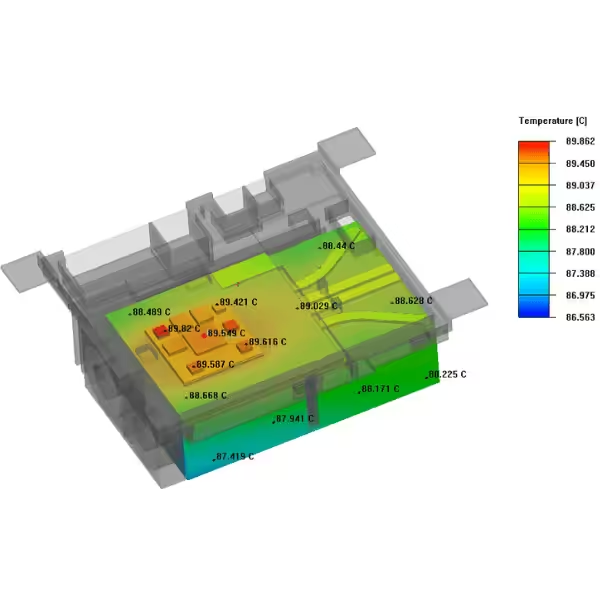
In a multi-domain controller project, a liquid cooling design used brazable die-cast material with thermal conductivity up to 160 W/m.K. Thermal simulation showed Tj at 93.719 C under the project boundary conditions.
The lesson: modern vehicles are turning compute hardware into serious heat sources. The radiator conversation now includes electronics cooling.
Case 3: Air Cooling Is Not Automatically Outdated
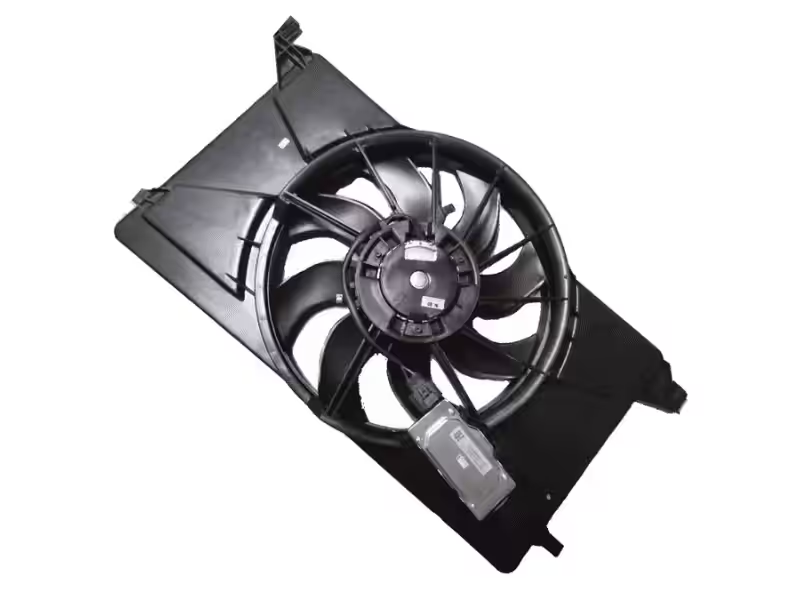
In another domain controller project, an air-cooled module showed simulated Tj at 114.90 C under its defined boundary conditions.
That does not mean air cooling failed. It means the decision must depend on chip power, allowable junction temperature, airflow, packaging, noise, cost, and reliability.
The lesson: do not choose liquid cooling because it sounds cooler. Choose it because the data says you need it.
Case 4: DFM Can Reduce Cost Without Killing Performance
In one liquid-cooled controller program, the cover design changed from die casting to stamping. The DFM report passed, and the redesign supported cost reduction.
The lesson: a good thermal solution is not only about temperature. It must also survive manufacturing, purchasing, assembly, and finance. Finance is often the hottest department in the building.
How to Choose the Right Radiator Type
Here is a practical shortcut.
Choose aluminum-plastic when you need standard passenger car replacement, competitive cost, and mature fitment.
Choose all-aluminum when you need higher durability, better performance image, custom design, or heavy-duty use.
Choose copper-brass when legacy fitment, repairability, or industrial service matters more than weight.
Choose crossflow when the vehicle has a wide, low front-end layout.
Choose downflow when the platform has enough vertical space or uses an older top-bottom tank layout.
Choose single-row when heat load is standard and weight or cost matters.
Choose double-row or multi-row when the vehicle faces towing, racing, hot climates, or high load, but confirm airflow and pressure drop.
Choose compact when packaging is tight, but demand proper thermal validation.
Choose EV liquid thermal products when the heat source is battery, inverter, motor, charger, or compute hardware.
Choose fuel cell thermal systems when the project involves stack cooling, hydrogen-side heat exchange, and intelligent control.
FAQ
Do electric vehicles still need radiators?
Yes. EVs do not need engine radiators in the old sense, but they still need thermal management. Batteries, motors, inverters, chargers, and cabin systems all produce or manage heat. The hardware may include low-temperature radiators, chillers, liquid cold plates, and battery cooling plates.
Is an all-aluminum radiator always better than an aluminum-plastic radiator?
No. All-aluminum radiators can be stronger and better for high-load use, but aluminum-plastic radiators are still practical for many passenger cars. The best choice depends on heat load, budget, vehicle layout, and validation standard.
Are more radiator rows always better?
No. More rows can add heat exchange area, but they can also increase air resistance, weight, and coolant pressure drop. A well-designed single-row core can outperform a poorly designed thick core.
What is the difference between crossflow and downflow radiators?
Crossflow radiators move coolant horizontally between side tanks. Downflow radiators move coolant vertically between top and bottom tanks. Crossflow designs often suit modern low hood lines, while downflow designs are common in older vehicles, trucks, and special layouts.
What should I ask a radiator supplier before ordering?
Ask about fitment, material, heat rejection data, leak testing, pressure cycling, corrosion testing, vibration testing, cleanliness control, and production traceability. Price matters, but a leaking low-cost radiator is just an invoice with coolant attached.
Final Takeaway
The best radiator type is not the one with the biggest core, the most rows, or the loudest product page.
It is the one that fits the vehicle, handles the heat load, survives the duty cycle, passes the right tests, and can be produced consistently.
For a simple passenger car replacement, that may be an aluminum-plastic crossflow radiator. For a towing truck, it may be a stronger all-aluminum or multi-row design. For an EV, it may be a liquid cold plate and chiller loop. For a fuel cell vehicle, it may be an intelligent ATS system tied into vehicle CAN control.
If you are sourcing radiators or heat exchangers for passenger cars, commercial vehicles, EV platforms, or fuel cell systems, start with four things: vehicle data, heat load, installation space, and test requirements.
Get those right, and the radiator stops being a mystery box. It becomes what it should be: a controlled, validated, boringly reliable heat exchanger. In thermal management, boring is beautiful.