
If you have a tube of desktop thermal paste and a working PS5, leave the processor joint alone. The original PS5, PS5 Slim and PS5 Pro use liquid metal between the main processor and its heatsink. Ordinary paste can conduct heat, but that alone does not make it a suitable replacement in this assembly. A louder fan during a game is not evidence that the material needs changing.
What is on the PS5 processor?
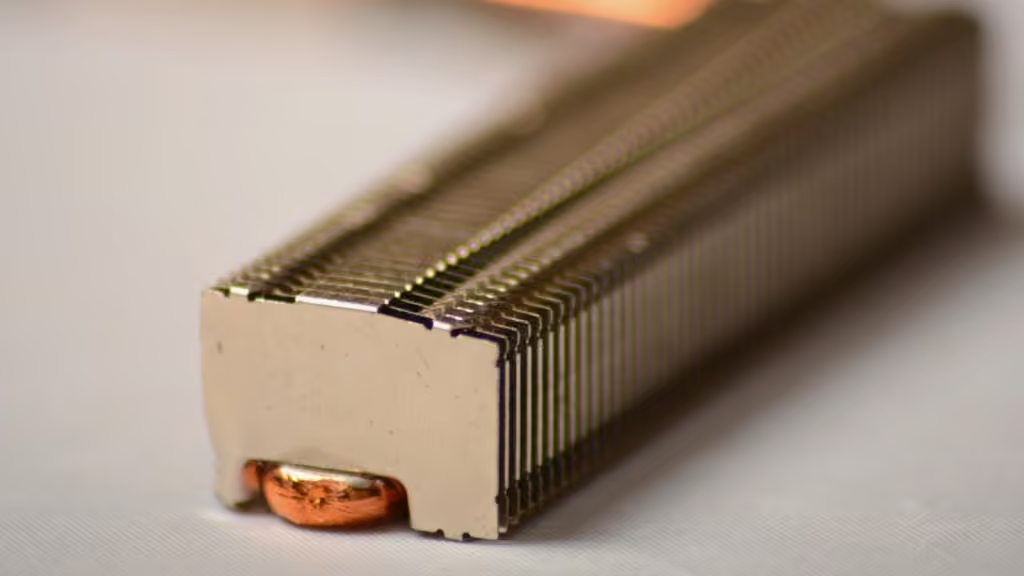
The main chip, often called the APU, contains the CPU and GPU. Sony’s engineers describe the liquid-metal interface at this chip and the insulation they developed for it. On the Pro they refined the surface where the liquid metal sits. Our PS5 and PS5 Pro heatsink comparison shows how heat travels beyond that contact.
The material and the surrounding parts work together. In the iFixit PS5 Pro repair guide, a foam barrier surrounds the APU to contain the electrically conductive liquid. The guide also notes that the wrong thickness of thermal pads elsewhere in the assembly can prevent that barrier from sealing. A sheet pad, the foam barrier and the material on the die do three different jobs.
Why a conductivity rating does not settle the question
A rating in W/(m·K) describes the material, not the finished joint. Suppose the same compound covers the same area in two otherwise identical assemblies. If its installed layer is twice as thick, the resistance to heat flow through that layer doubles in a simple flat-layer model. The resistance at the two contact surfaces is additional. Noctua explains why bond-line thickness, mounting pressure and contact quality matter when comparing compounds.

An idealized comparison at fixed conductivity and contact area. The drawing illustrates the material layer only; it does not specify a thickness for a PS5.
Read the product label in context
A second label to check is electrical conductivity. Noctua lists NT-H2 paste as electrically non-conductive. Thermal Grizzly lists its Conductonaut liquid metal as electrically conductive and rules out contact with aluminum. Those are properties of two named retail products, not a list of approved PS5 replacements. The relevant metal surface is the one touching the compound, not a fin elsewhere in the cooler.
What a PS5 paste-swap test can tell you
TronicsFix compared two PS5 consoles: one kept its factory interface and the other received thermal paste. Part of the demonstration tested how long the units would run with their fans disabled; the one with paste shut down sooner. That is a test of what happens when forced airflow is lost. It does not tell you the chip-temperature difference during normal gaming, how long either material will last or when a working console needs service.
When should you ask for service?
If your console runs normally, Sony’s owner guidance gives you practical ways to keep the vents clear; it does not prescribe periodic owner replacement of the processor material. If the fan gets louder only in certain games, start with PlayStation’s ventilation checks. If an on-screen heat warning appears, stop playing, turn the console off and let it cool. Use a well-ventilated location before resuming; recurring warnings warrant PlayStation hardware support.
If a console has already been serviced and the invoice just says “repasted,” ask what was changed: the compound on the APU or pads on other components? How were the pad heights and foam barrier checked? Did the original symptom recur under the same game workload? A console reaching its home screen proves that it boots, not that its cooling repair holds up under load.
For a custom heatsink drawing
In HJTC’s custom heatsink work, customers commonly ask for both thermal resistance and contact-face flatness. On an OEM drawing, pair the proposed interface material with its installed thickness range, allowable load and mating surface. That gives the assembly designer a measurable joint to verify, rather than a conductivity number with no mounting conditions.