
If you’ve spent any time designing modern electronics, you already know the story: chips keep getting smaller, power densities keep climbing, and somehow you’re expected to keep everything cool enough to actually work. 5G base stations are pushing watts per square centimeter to levels that would have seemed absurd a decade ago. EV power modules are squeezing hundreds of kilowatts through components the size of a paperback book. And don’t even get me started on the latest generation of high-performance processors — thermal management isn’t just an afterthought anymore, it’s the bottleneck.
That’s where extruded heat sinks come in. They’ve quietly become the workhorse of the thermal industry — the most widely used, cost-effective, and scalable solution on the market today. Whether you’re cooling an inverter, an LED array, or a 5G radio unit, chances are an extruded aluminum heat sink is doing the heavy lifting.
Here’s where I’ll level with you: as a heat sink manufacturer established in October 2010, producing over 60 million heat sinks per year across a 32,200 m² facility, we’ve seen what works on paper — and what actually holds up on the production floor. In this guide, we’ll share both the technical fundamentals and the hands-on production insights you won’t find in textbooks.
What Is an Extruded Heat Sink?
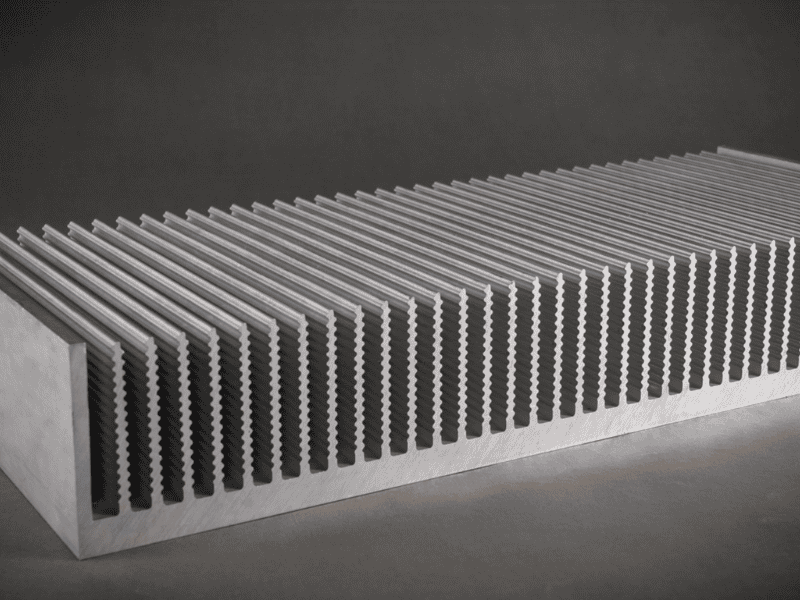
Let’s start with the basics. While we’ve covered the general concept of what a heat sink is previously, An extruded heat sink is a thermal component manufactured through the aluminum extrusion process — and the process itself is honestly pretty satisfying to watch. A solid aluminum billet is heated until it reaches a soft, malleable state (somewhere around 450–500 °C), then forced through a precision-machined die under tremendous hydraulic pressure. What comes out the other side is a long, continuous profile with the finned cross-section already built in. Cut it to length, finish the surface, and you’ve got a heat sink.
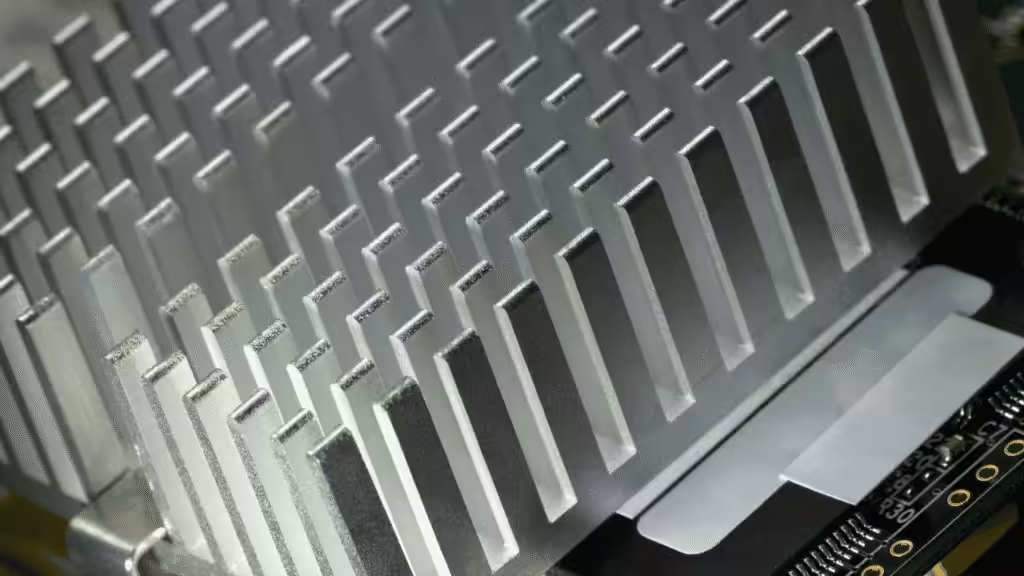
It sounds simple in theory, but the magic is in the geometry. The whole point of those fins isn’t aesthetic — it’s surface area. The more surface area you can expose to moving air, the more efficiently heat transfers from the component, through the base, up the fins, and out into the surrounding environment. This happens through two mechanisms working together: conduction (heat moving through the solid aluminum) and convection (heat being carried away by air, whether passive or fan-forced). A well-designed extruded heat sink optimizes both, often without the designer even thinking about it.
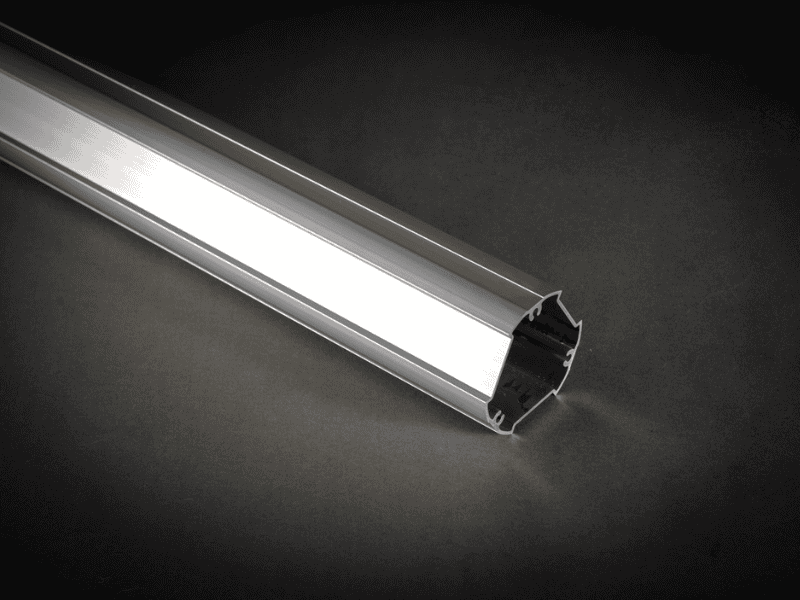
Material choice matters too — maybe more than people realize. The two alloys we work with most often are 6063 and 6061, and for good reason. Both deliver thermal conductivity in the neighborhood of 200 W/m·K, which is more than enough for the vast majority of power electronics applications. They also extrude beautifully — meaning we can hit tight tolerances, run thinner fins, and achieve cleaner surface finishes without fighting the material. Copper conducts heat better on paper, sure, but it’s heavier, more expensive, and significantly harder to extrude at scale. For 95% of real-world applications, aluminum wins on every metric that actually matters.
From our shop floor: In our facility, extruded heat sinks are produced on dedicated aluminum extrusion machines and profile production lines, with an annual aluminum profile capacity of 6,000 tons. That kind of throughput only works when the alloy, die design, and press parameters are dialed in together — something we’ve spent over a decade refining.
How Are Extruded Heat Sinks Manufactured?
This is the section I get most excited about — partly because it’s where theory meets reality, and partly because there’s a lot of misinformation floating around online about how these things actually get made. So let’s walk through it the way it really happens on a production floor.
Step-by-Step Production Process
Step 1: Aluminum Billet Heating
Everything starts with a raw aluminum billet — typically a cylindrical log of 6063 or 6061 alloy. Before it can be extruded, it has to be heated to roughly 450–500 °C. That temperature window matters more than people realize. Too cold, and the aluminum won’t flow properly through the die. Too hot, and you start losing dimensional control and surface quality. We monitor billet temperature continuously, because even a 20-degree swing can affect fin straightness on a high-aspect-ratio profile.
Step 2: Extrusion Forming
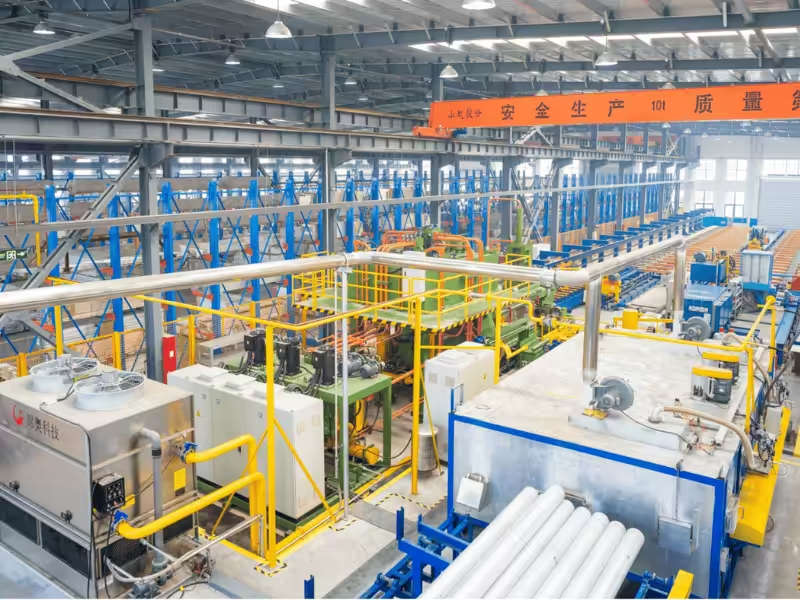
Once the billet is at temperature, it’s loaded into the extrusion press and forced through a steel die under thousands of tons of hydraulic pressure. The aluminum emerges on the other side as a continuous profile — fins, base, and all — looking essentially like a really long heat sink ribbon. This is where die design becomes critical. A well-designed die produces clean, parallel fins with consistent thickness from the first meter to the last. A poorly designed one creates twist, wave, and dimensional drift that no amount of downstream processing can fully correct.
Step 3: Cutting & Straightening
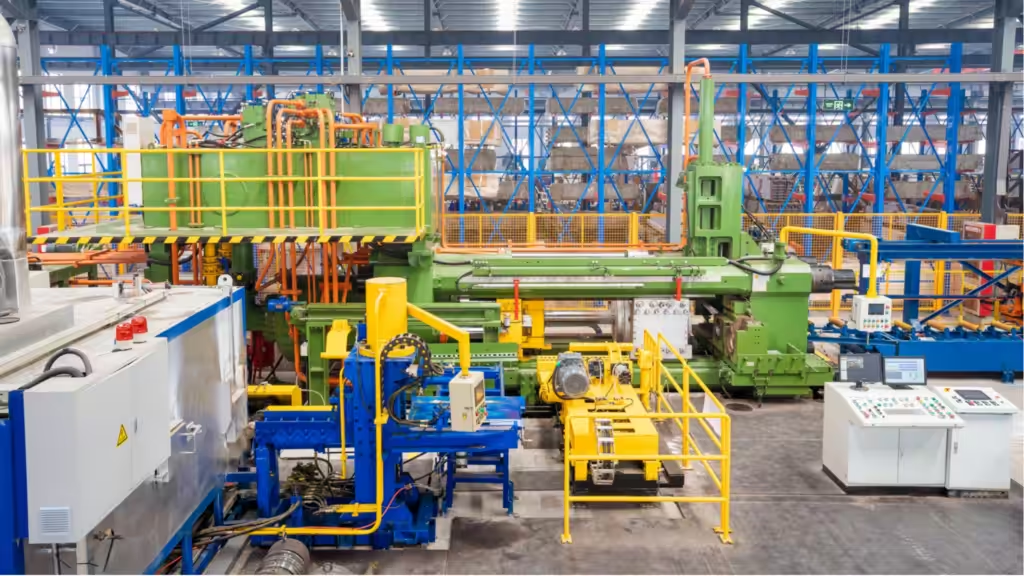
The extruded profile is then stretched to remove any residual twist, straightened on a precision table, and cut to the customer’s required length. Straightness tolerance matters here — especially for heat sinks that need to mate flat against a power module or cold plate. A bowed base means uneven thermal contact, and uneven contact means hot spots.
Step 4: Stamping
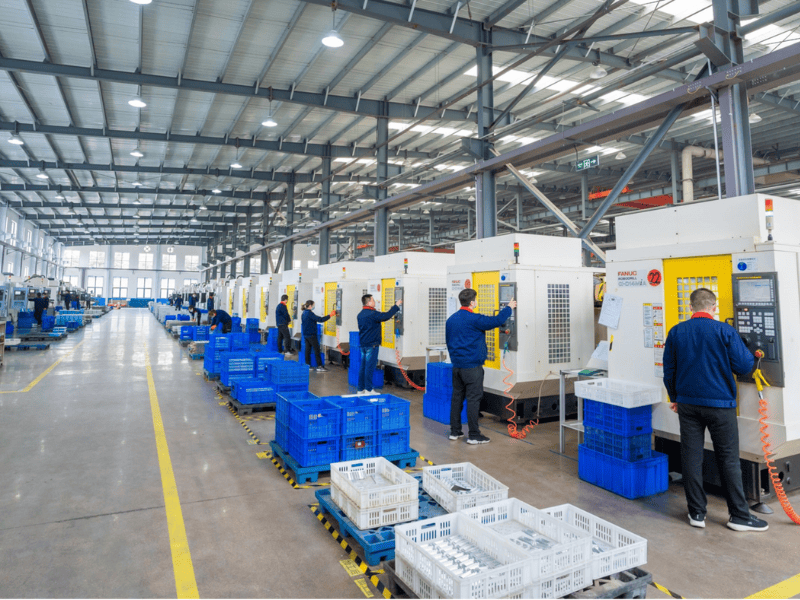
Most heat sinks don’t ship as plain extruded bars. They need mounting holes, threaded inserts, cutouts, or custom hole patterns to integrate with the customer’s assembly. That’s handled on our dedicated stamping machine production lines, which let us add machined features without disturbing the thermal geometry of the fins.
Step 5: Surface Treatment
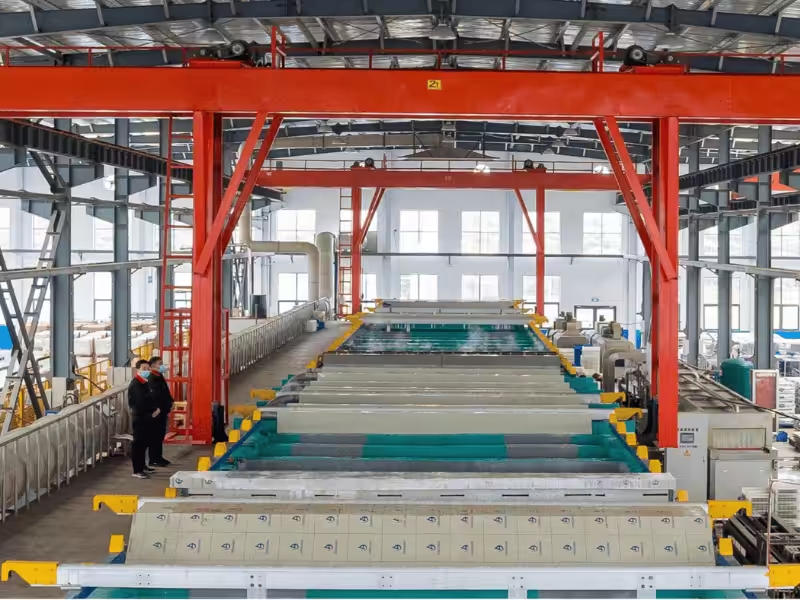
This is where extruded heat sinks really earn their reputation for versatility. Depending on the application, we offer:
- Anodizing — improves corrosion resistance and increases thermal emissivity (black anodizing in particular can boost radiative heat transfer)
- Sandblasting — creates a matte, uniform finish and improves paint adhesion
- Powder coating — durable colored finishes for visible or outdoor applications
- Electrophoresis — exceptional corrosion protection for harsh environments
Choosing the right finish isn’t just cosmetic — it has measurable thermal and lifecycle implications.
Step 6: Quality Control
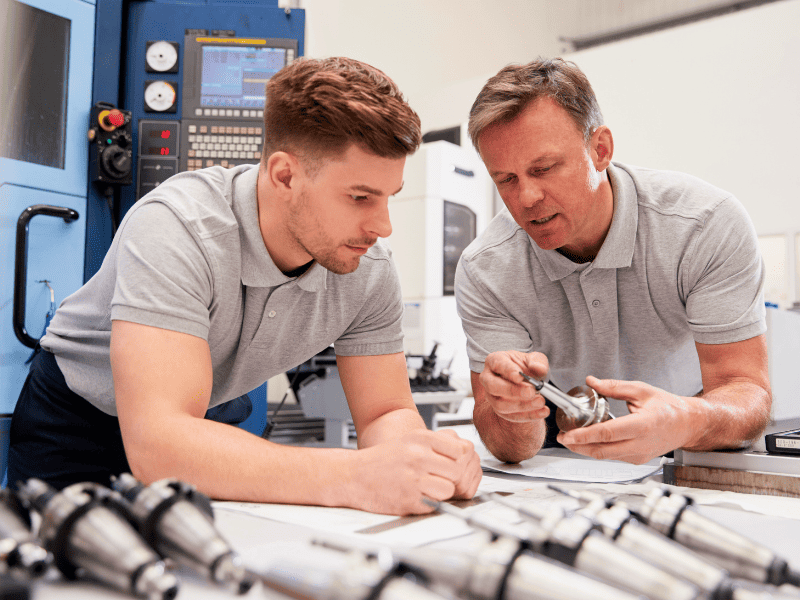
Every batch goes through dimensional inspection, surface finish checks, and thermal verification where applicable. We’ll dig into the specifics in section 2.2.
Step 7: Warehousing & Logistics
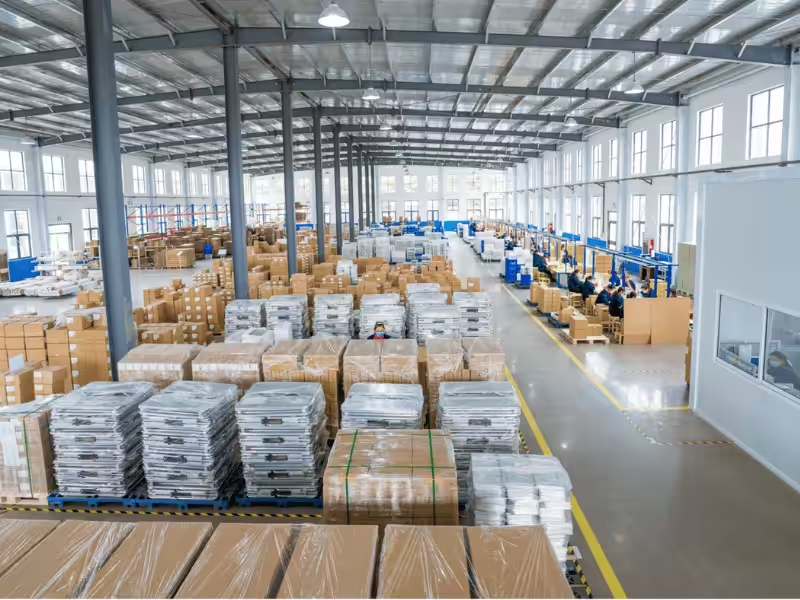
Finally, finished products are organized, packaged, and shipped according to delivery schedules. This sounds like the boring part, but ask any procurement manager — late deliveries can shut down an entire assembly line. Logistics discipline matters as much as production discipline.
From the production floor: Our six-stage workflow — from extrusion to QC — is supported by 260 production staff and 25 dedicated engineers and quality inspectors to ensure dimensional tolerance and thermal consistency across every batch we ship. That ratio of engineers to operators is something we’re genuinely proud of; it’s the reason we can hold tight tolerances even on complex custom profiles.
Quality Control Standards

Manufacturing capability is only half the story. Without disciplined quality control, even the best equipment will produce inconsistent parts. Here’s how we approach it.
Certifications:
- ISO 9001 — Quality Management System certification, covering every stage of our production workflow
- ISO 14001 — Environmental Management System certification, ensuring our processes meet international environmental standards
These aren’t just plaques on the wall. ISO audits keep documentation honest, force continuous internal review, and give customers a verifiable baseline of process discipline.
Our quality principles:
- Lean management — eliminate waste, optimize flow, respect operator input
- High-end manufacturing — invest in precision equipment and trained personnel
- Continuous improvement — every defect is a lesson, not just a rejection
- Customer satisfaction — the only metric that ultimately matters
Key inspection points along the line:
| Stage | What We Inspect |
|---|---|
| Raw material | Alloy composition, billet integrity, supplier traceability |
| Post-extrusion | Cross-sectional dimensions, fin straightness, surface defects |
| Post-treatment | Coating thickness, color consistency, adhesion |
| Pre-packaging | Final dimensional audit, visual inspection, count verification |
The point of all this isn’t to chase perfection — it’s to catch problems early, where they’re cheap to fix, rather than late, where they become customer complaints. After 14+ years of running this process, we’ve learned that good quality control isn’t about adding more inspection steps. It’s about building the right checks into the right stages, and trusting the people who run those stations to flag issues the moment they appear.
Advantages of Extruded Heat Sinks

Why have extruded heat sinks become the default choice across so many industries? It’s simple: when you weigh cost, performance, and manufacturability together, extrusion consistently wins for the vast majority of thermal applications.
| Advantage | What It Means in Practice |
|---|---|
| Cost-Effective | Once the die is paid for, per-unit cost drops sharply at volume — often a fraction of skived or bonded-fin alternatives. |
| Design Flexibility | Fin height, pitch, and base thickness are all customizable through die design, allowing thermal performance to be tuned to each application. |
| Lightweight | At ~2.7 g/cm³, aluminum is about one-third the weight of copper — ideal for EVs, drones, and telecom equipment. |
| Customizable Finishes | Anodizing, powder coating, and electrophoresis add corrosion resistance and boost emissivity (black anodizing raises it from ~0.05 to ~0.85). |
| Mass-Production Ready | Leading manufacturers produce over 60 million pieces per year with consistent quality — a scale other processes can’t match. |
| Recyclable | Aluminum is 100% recyclable using just 5% of the energy of primary production, supporting OEM sustainability goals. |
The Honest Caveat
Extrusion isn’t magic. Fin aspect ratio is practically limited to around 8:1–12:1, so ultra-dense fin arrays may require skived or bonded-fin designs. Complex 3D geometries like pin-fin arrays also call for other processes. But within their working envelope — which covers most real-world applications — extruded heat sinks deliver an unbeatable balance of performance, cost, and scalability. That’s why they remain the industry workhorse.
Extruded Heat Sink vs Other Heat Sink Types
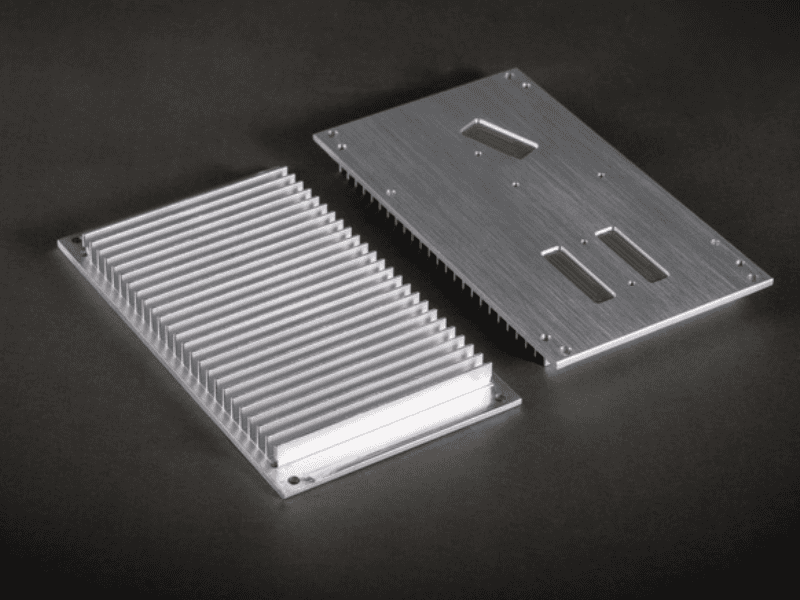
Extruded isn’t the only option on the table — and being upfront about that matters. Before we look at the comparison table below, you can explore our complete guide on the different types of heat sinks to understand the broader thermal landscape.Here’s how the main heat sink types stack up against each other:
Type Process Fin Aspect Ratio Cost Typical Applications Extruded Aluminum extrusion Medium (8:1–12:1) Low Power electronics, inverters, LED lighting Skived Skived from a solid block High (40:1+) Medium–High CPU/GPU coolers, dense thermal zones Bonded-Fin Fins bonded into a base Very High High Servers, IGBT modules Copper Heat Pipe Heat pipe + fin stack Medium–High Medium Telecom, networking equipment Stamped Sheet metal stamping Low Very Low Low-power consumer electronics How to Choose
There’s no universally “best” heat sink — only the right one for your application. Three factors should drive the decision:
- Required thermal resistance (°C/W) — the lower your target, the denser your fins need to be.
- Available space — tight enclosures often push you toward skived or bonded-fin designs.
- Budget and volume — extruded wins decisively on cost at scale; stamped wins on ultra-low-power, low-cost builds.
For most mid-power applications in the 20–500 W range, extruded heat sinks hit the sweet spot — enough thermal performance for the job, at a price point that scales cleanly into mass production.
Typical Applications of Extruded Heat Sinks
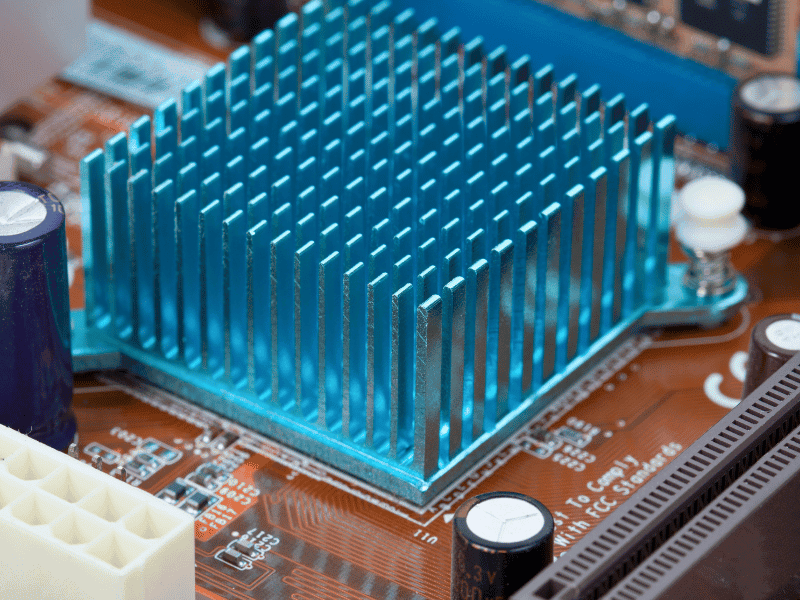
Extruded heat sinks show up almost everywhere heat needs to go somewhere. Here are the core areas where we see them deployed every day:
- ⚡ Power Electronics — our core specialty, covering everything from IGBT modules to motor drives.
- 📡 5G Base Stations — compact, high-density thermal modules that keep radio units cool in all weather conditions.
- 🔌 Inverters, Converters & VFDs — solar, industrial, and EV-charging applications where reliability is non-negotiable.
- 💡 LED Lighting — street lights, high-bay fixtures, and architectural lighting where longevity depends on thermal management.
- 🚗 EV Power Modules & Motor Controllers — lightweight aluminum is a natural fit for electric mobility.
- 🏭 Industrial Aluminum Profiles — including electric motor housings and precision structural components.
- 🖥️ Telecom & Industrial Computing — servers, switches, and edge computing hardware operating around the clock.
Real-World Deployment
“Our extruded heat sinks are deployed in 5G station thermal modules, electric motor housings, and precision structural components for industrial clients across global markets.”
The common thread? Each of these applications demands a balance of thermal performance, reliability, and cost-efficiency at scale — exactly where extrusion shines.
How to Choose the Right Extruded Heat Sink
Selecting the right heat sink isn’t just about picking a part from a catalog — it’s about matching technical specs to your application and choosing a supplier who can deliver consistently. Here’s how to approach both.
Key Technical Parameters
Before requesting quotes, define these specs as clearly as possible:
- Thermal resistance (°C/W) — the single most important performance metric.
- Fin geometry — height, pitch, and thickness directly affect cooling capacity.
- Base plate thickness — critical for heat spreading from concentrated sources.
- Total surface area — more area generally means better convection.
- Surface treatment — anodizing, powder coating, or electrophoresis based on environment and emissivity needs.
- Mounting method — screws, clips, or thermal interface materials, depending on assembly requirements.
The clearer your spec sheet, the faster and more accurate your supplier’s response will be. If you are ready to dive deeper into engineering optimization, check out our masterclass: The Practical Ultimate Guide to Heat Sink Design: 8 Keys to Success.
Five Questions to Ask Your Supplier
A good supplier should answer these without hesitation:
- Do you hold ISO 9001 and ISO 14001 certifications? — baseline proof of quality and environmental management.
- Can your monthly and annual capacity meet our project demand? — scalability matters as your volume grows.
- Do you offer custom die development for unique fin geometries? — essential if standard profiles don’t fit your design.
- Is your facility equipped for the full process — extrusion, stamping, surface treatment, and QC under one roof?
- How large is your engineering team, and what’s your typical response time? — technical support often determines whether a project succeeds or stalls.
A supplier who can confidently answer all five is one worth shortlisting. One who hesitates on any of them is a risk you don’t need to take.
Why Choose a Specialized Extruded Heat Sink Manufacturer? (Trust-Building Section)
When thermal management is critical to your product’s reliability, the manufacturer behind your heat sink matters as much as the heat sink itself. Specialization brings depth — in engineering, in process control, and in long-term consistency. Here’s a transparent look at our credentials.
Verified Manufacturer Profile
| Item | Data |
|---|---|
| Established | October 2010 (14+ years of experience) |
| Land Area | 32,200 m² |
| Building Area | 18,000 m² |
| Total Staff | 260 employees |
| Engineers & QC | 25 specialists |
| Heat Sink Capacity | 60 million pieces / year |
| Aluminum Profile Capacity | 6,000 tons / year |
| Certifications | ISO 9001, ISO 14001 |
| Product Scope | Heat sinks + industrial aluminum profiles |
These numbers reflect more than scale — they represent 14 years of refining a single specialty: turning aluminum into reliable thermal solutions.
Full Product Portfolio
We don’t just make extruded heat sinks. Our complete capability covers the full thermal and structural aluminum ecosystem:
- Extruded heat sinks
- Skived heat sinks
- Bonded-fin heat sinks
- Copper-pipe heat sinks
- 5G base station heat sinks
- Electric motor housings
- Precision structural components
- Industrial aluminum profiles
This breadth means we can recommend the right solution for your application — not just the one we happen to make.
Our Philosophy

We are dedicated to the R&D and manufacture of power electronic heat sinks — providing excellent products and services, satisfying customer needs, and striving to be the preferred supplier for our partners.
In an industry where commodity suppliers come and go, specialization, certification, and capacity are what separate a vendor from a true long-term partner. That’s the standard we hold ourselves to — and the standard we believe our customers deserve.
Frequently Asked Questions
Here are the most common questions engineers and procurement teams ask when sourcing extruded heat sinks — answered concisely so you can make informed decisions faster.
Q1: What material is used for extruded heat sinks?
Most commonly 6063 and 6061 aluminum alloys. These grades offer the best balance of thermal conductivity (~200 W/m·K) and extrudability, making them the industry standard for the vast majority of heat sink applications.
Q2: How thick can extruded heat sink fins be?
Fin thickness typically ranges from 1.0 to 3.0 mm, with aspect ratios up to 8:1–12:1 in standard production. Higher ratios are possible with specialized dies, but they require careful engineering review to ensure manufacturability.
Q3: Are extruded heat sinks better than skived heat sinks?
It depends on the application:
- Extruded — ideal for low-cost, high-volume projects with moderate thermal demand.
- Skived — better for high fin density and concentrated heat loads where extrusion limits are exceeded.
A good supplier will recommend the right process based on your thermal budget, not just their available equipment.
Q4: Can extruded heat sinks be customized?
Yes. Custom dies allow tailored dimensions, fin patterns, and base configurations. Most reputable manufacturers offer in-house die development to support unique geometries for specific applications.
Q5: What surface treatments are available for extruded heat sinks?
Common options include:
- Anodizing (black or silver) — enhances corrosion resistance and thermal emissivity
- Sandblasting — provides a uniform matte finish
- Powder coating — adds color and protection
- Electrophoresis — delivers durable, even coverage
Black anodizing is particularly popular because it boosts radiative heat transfer in addition to protecting the surface.
Q6: What is the typical lead time for custom extruded heat sinks?
- Die development to first samples: 3–5 weeks
- Mass production: varies by order volume and surface treatment requirements
For time-sensitive projects, it’s worth confirming both die-making capacity and production scheduling with your supplier upfront.
Conclusion & Call to Action
Extruded heat sinks remain the most balanced thermal solution available today — combining cost-efficiency, proven performance, and unmatched scalability. From power electronics and 5G infrastructure to LED lighting and EV systems, they continue to be the default choice for engineers who need reliable cooling without overcomplicating the design.
While newer technologies like skived and bonded-fin heat sinks fill important niches, extrusion’s combination of mature process control, design flexibility, and competitive cost keeps it at the center of modern thermal management.
📩 Ready to Start Your Project?
Looking for a reliable extruded heat sink supplier?
Contact our engineering team today for a free thermal design consultation and a custom quotation tailored to your application.
With 14+ years of specialization, ISO-certified processes, and 60 million pieces of annual capacity — we’re ready to be your long-term thermal solution partner.